

Views: 222 Author: Rebecca Publish Time: 2025-02-25 Origin: Site


Content Menu
● Introduction to Electric Soup Kettles
>> Key Features of Electric Soup Kettles
● How Electric Soup Kettles Work
● Types of Electric Soup Kettles
● Benefits of Using Electric Soup Kettles
● Innovative Features of Modern Electric Soup Kettles
● FAQ
>> 1. What is the primary use of an electric soup kettle?
>> 2. Can electric soup kettles be used for cooking soup?
>> 3. How do I clean an electric soup kettle?
>> 4. What safety features should I look for in an electric soup kettle?
>> 5. Can electric soup kettles be used for other purposes besides soups?
Electric soup kettles are versatile kitchen appliances designed to keep soups, sauces, and other liquids at a consistent temperature, making them ideal for both home and commercial use. These kettles are particularly popular in restaurants, cafes, and catering services due to their ability to maintain precise temperature control, ensuring that soups are served at the perfect warmth without overcooking.
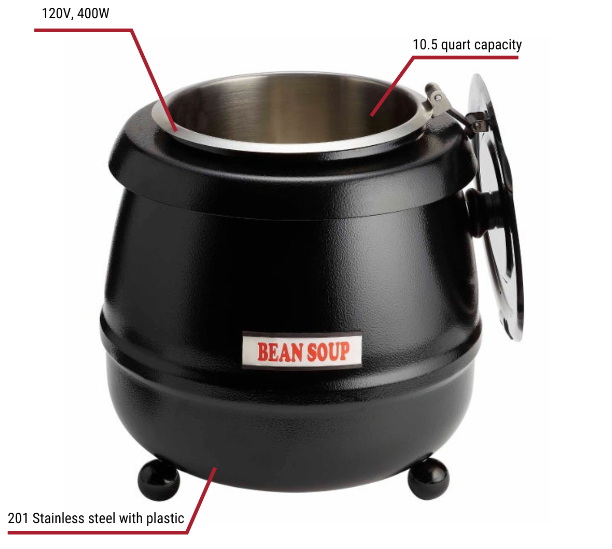
Electric soup kettles are typically made from durable materials such as stainless steel, aluminum, and polypropylene, which provide excellent heat retention and ease of cleaning. They come in various sizes, ranging from small 4-quart models to large 100-gallon units, catering to different needs and environments.
1. Temperature Control: One of the most important features of electric soup kettles is their ability to maintain precise temperature control. This ensures that soups are kept at safe temperatures, preventing bacterial growth and maintaining flavor. Most kettles allow temperature settings between 70°F and 125°F (21°C to 52°C), with some models offering more precise control in increments of 1°C[3][4].
2. Capacity: The capacity of electric soup kettles varies widely, from small units suitable for home use to large commercial models. Choosing the right size is crucial for efficient service, especially in busy kitchens or during events[3].
3. Ease of Cleaning: Easy cleaning is essential for maintaining hygiene and prolonging the life of the kettle. Many models feature removable liners and non-stick surfaces that simplify the cleaning process[3].
4. Energy Efficiency: Modern electric soup kettles are designed to be energy-efficient, using advanced insulation and heating systems to minimize power consumption while keeping soups warm for extended periods[3][4].
5. Safety Features: These kettles often include safety features such as overheat protection and low water level alarms to prevent damage and ensure safe operation[4][8].
Electric soup kettles operate using a simple yet effective mechanism:
1. Setup: Before use, the kettle needs to be filled with water between the inner stainless steel liner and the outer container. The minimum and maximum water levels are usually indicated on the kettle[2].
2. Temperature Setting: Users can set the desired temperature using a dial or digital control panel. The kettle heats the water, which in turn keeps the soup at the set temperature through a water bath system[1][8].
3. Operation: Once the kettle is turned on, it begins to heat the water. A neon light or indicator shows when the kettle is in operation. The temperature control ensures that the soup remains at a consistent temperature, preventing overheating[2][8].
4. Safety Features: Many kettles have built-in safety features like overheat protection and low water level alarms. These features prevent the kettle from operating without sufficient water, reducing the risk of damage or fire[4][8].
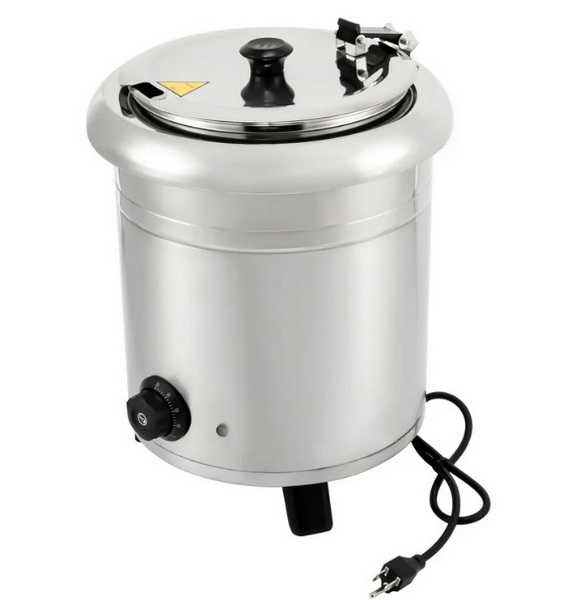
These are the most common type, offering ease of use and rapid heating. They are suitable for both home and commercial environments[9].
Gas-powered kettles provide high heating efficiency and precise temperature control, making them popular in professional kitchens[9].
Steam kettles use indirect heat, maintaining a consistent temperature while being energy-efficient. They are ideal for continuous soup production in busy kitchens[9].
1. Consistent Temperature Maintenance: Electric soup kettles ensure that soups are kept at a safe temperature, preventing bacterial growth and maintaining flavor[3].
2. Durability: These kettles are built to last, with durable materials and precise temperature controls that minimize wear and tear[3].
3. Front-of-House Design: They are designed to be visually appealing, making them suitable for self-serve stations and buffets[3].
4. Efficiency: Electric soup kettles streamline service by allowing customers to serve themselves, reducing labor costs and improving customer satisfaction[3].
Modern electric soup kettles incorporate advanced technologies to enhance efficiency and user experience:
1. Energy Efficiency: New models focus on reducing energy consumption through better insulation and heating systems[3].
2. Advanced Temperature Control: Digital displays and precise temperature settings allow for accurate control, ensuring that soups are kept at the perfect temperature[3][4].
3. Design and Mobility: Many kettles are designed to be lightweight and mobile, with features like non-slip feet for stability[8].
1. Proper Setup: Always ensure the kettle is placed on a level surface and plugged into a properly grounded outlet[10].
2. Regular Cleaning: Clean the kettle regularly to prevent buildup and maintain performance. Use mild detergents and avoid immersing the outer container in water[10].
3. Safety Precautions: Never leave the kettle unattended or operate it when empty. Keep it away from children and flammable materials[10].
Electric soup kettles are indispensable tools for maintaining soups at the perfect temperature, whether in a home kitchen or a commercial setting. Their ability to provide consistent heat, combined with features like ease of cleaning and energy efficiency, makes them a valuable addition to any soup-serving establishment.
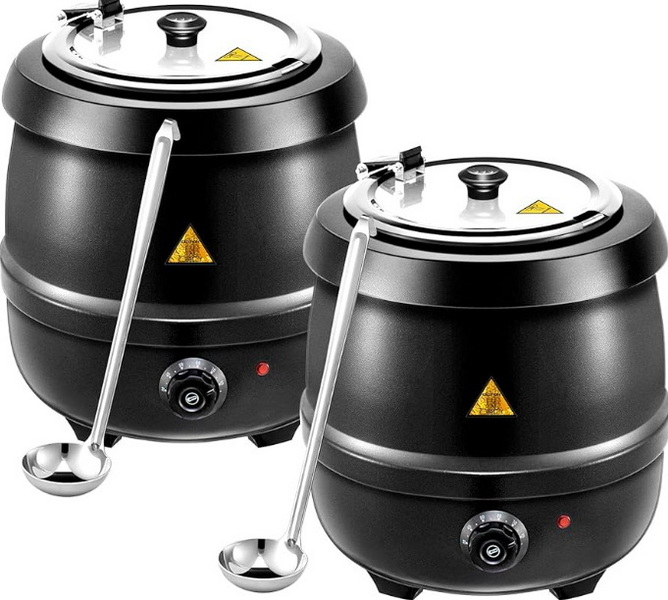
An electric soup kettle is primarily used to keep soups and other liquids at a consistent temperature, making it ideal for serving hot soups without overcooking them. It is not designed for cooking but rather for maintaining warmth[1][3].
No, electric soup kettles are not suitable for cooking soup. They are designed to maintain temperature, not to cook food. Cooking should be done separately before transferring the soup to the kettle[1][6].
Cleaning an electric soup kettle involves unplugging it, letting it cool, and then washing the removable parts with mild soap and water. Avoid immersing the outer container in water or using harsh detergents[10].
Important safety features include overheat protection, low water level alarms, and secure handles to prevent accidents. Always ensure the kettle is placed on a stable surface and kept away from children[4][8].
Yes, electric soup kettles can be used for heating sauces, hot dogs, meatballs, and other buffet items. They are versatile and can be adapted for various culinary needs[1][9].
[1] https://maxima.com/en/heating/soup-kettle/
[2] https://www.angliacateringequipment.com/wp-content/uploads/2019/05/iMettos-SB-6000-Soup-Kettle-10L.pdf
[3] https://www.swireinn.com/commercial-appliances/buffet-catering-equipment/commercial-soup-kettles-for-self-serve-stations/
[4] https://www.hendi.eu/en/soup-kettle-4809.html
[5] https://www.youtube.com/watch?v=-2QMYDv6E9s
[6] https://www.yongkeng.com/can-you-cook-soup-in-an-electric-kettle.html
[7] https://www.everythingkitchens.com/media/manual/TC1.pdf
[8] https://www.youtube.com/watch?v=9LeIf9mN-1g
[9] https://leadingcatering.com.au/blog/post/beginners-kettle-guide
[10] https://simcogroup.com.au/blog/post/how-to-use-clean-and-maintain-a-hot-soup-kettle/
[11] https://www.aromaco.com/faq/electric-kettles/
[12] https://www.reddit.com/r/restaurantowners/comments/1eveuk0/will_a_400watt_commercial_soup_kettle_heat_soup/
[13] https://leadingcatering.com.au/blog/post/soup-kettle-storage-soup-safety-guide
[14] https://caterlink-web.s3.ap-southeast-2.amazonaws.com/public/partdocs/Robalec+SW1200+Operation+Manual.pdf
[15] https://www.nisbets.co.uk/soupkettles
[16] https://media.nisbets.com/asset/au/media/user%20manual%20l715-a.pdf
[17] https://www.germanpoolstore.com/eng/ktm-104.html
[18] https://www.youtube.com/watch?v=UfXgwriFgcU
[19] https://assets.catering-appliance.com/content/product-docs/3d/8f/j466-manual.pdf


