

Views: 222 Author: Rebecca Publish Time: 2025-02-13 Origin: Site


Content Menu
● The Anatomy of an Electric Kettle
● The Heating Mechanism in Electric Kettles
● Types of Heating Elements in Electric Kettles
● The Advantages of Modern Electric Kettles
● Maintenance and Care of Electric Kettles
● Environmental Considerations
● Innovations in Electric Kettle Technology
● FAQ
>> 1. How does an electric kettle know when to turn off?
>> 2. Are electric kettles more energy-efficient than stovetop kettles?
>> 3. Can I use an electric kettle to boil anything other than water?
>> 4. How often should I descale my electric kettle?
>> 5. Why do some electric kettles make noise while boiling?
Electric kettles have become an essential appliance in many households, offering a quick and efficient way to boil water for various purposes. However, there's often confusion about whether all electric kettles have a hot plate. In this comprehensive article, we'll explore the inner workings of electric kettles, their various components, and answer the titular question while providing valuable insights into these convenient devices.

Before we delve into the specifics of hot plates in electric kettles, it's crucial to understand the basic components that make up these appliances.
1. Water Reservoir: This is the main body of the kettle where water is held and heated.
2. Heating Element: The core component responsible for heating the water.
3. Power Base: In cordless models, this serves as the connection point for electricity.
4. On/Off Switch: Allows users to activate the kettle.
5. Automatic Shut-off Mechanism: A safety feature that turns off the kettle once water reaches boiling point.
6. Lid: Covers the top of the kettle, often with a release mechanism for easy filling.
7. Handle: Designed for safe and easy pouring.
8. Spout: The opening through which water is poured.
The primary function of an electric kettle is to heat water quickly and efficiently. This is achieved through an electrical heating element, which is typically located at the bottom of the kettle[1][2].
1. When the kettle is plugged in and switched on, electric current flows through the heating element.
2. The heating element, which has high electrical resistance, converts the electrical energy into heat energy.
3. This heat is then transferred to the water in the kettle through conduction.
4. As the water heats up, convection currents distribute the heat throughout the kettle.
5. Once the water reaches boiling point, a bimetallic strip in the thermostat bends, breaking the circuit and shutting off the kettle[5].
Now, let's address the main question: Do all electric kettles have a hot plate?
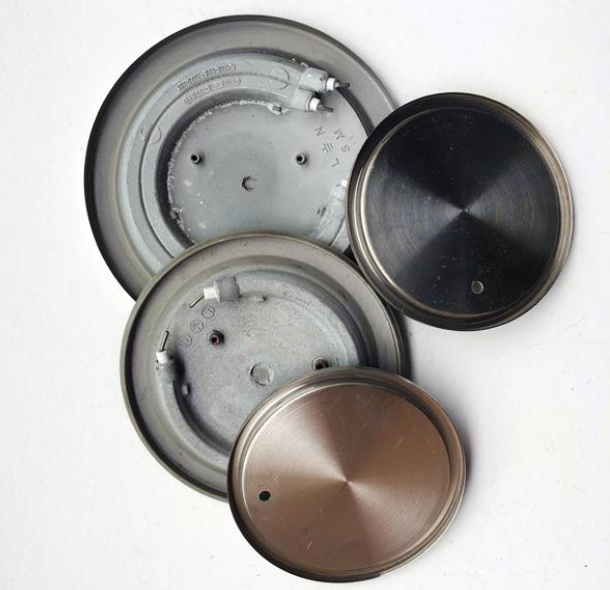
The short answer is no. The term "hot plate" in the context of electric kettles is often a misnomer. What many people refer to as a "hot plate" in an electric kettle is actually the heating element itself[1].
1. Internal Heating Element: Most modern electric kettles have an internal heating element that's in direct contact with the water. This element is usually a coiled wire or a flat disc at the bottom of the kettle[1][2].
2. Cordless Kettles: Many contemporary kettles are cordless, with a separate power base. The heating element is built into the kettle itself, not the base[6].
3. True Hot Plates: Some older or specialized models might use a separate hot plate on which the kettle sits, but this is not common in most household electric kettles.
Electric kettles employ various types of heating elements, each with its own advantages:
1. Exposed Element: This is the traditional coil visible at the bottom of the kettle.
2. Concealed Element: A flat disc hidden under the base of the kettle, offering easier cleaning and reduced limescale buildup.
3. Induction Heating: Uses electromagnetic fields to heat the water, typically found in more advanced models.
Modern electric kettles offer several benefits over traditional stovetop kettles:
1. Speed: They boil water significantly faster than stovetop methods[9].
2. Energy Efficiency: Electric kettles are generally more energy-efficient, especially when boiling small amounts of water.
3. Safety Features: Automatic shut-off and boil-dry protection enhance safety[4].
4. Temperature Control: Some models offer precise temperature settings for different types of beverages.
5. Convenience: Cordless models and 360-degree rotating bases make pouring and handling easier[9].
To ensure the longevity and efficiency of your electric kettle:
1. Regular Descaling: Remove mineral deposits, especially in hard water areas.
2. Proper Cleaning: Wipe the exterior and rinse the interior regularly.
3. Avoid Overfilling: Respect the maximum fill line to prevent spillage and electrical hazards.
4. Cord Management: For corded models, ensure proper storage of the power cord.
When choosing an electric kettle, consider its environmental impact:
1. Energy Efficiency: Look for models with good energy ratings.
2. Material: Opt for kettles made from recyclable or sustainable materials.
3. Longevity: Choose durable models to reduce electronic waste.
The electric kettle market continues to evolve with new features and technologies:
1. Smart Kettles: Wi-Fi-enabled kettles that can be controlled via smartphone apps.
2. Variable Temperature Control: Precise settings for different types of tea and coffee.
3. Keep Warm Function: Maintains water temperature for extended periods.
4. Noise Reduction: Some models focus on quieter operation.
In conclusion, not all electric kettles have a hot plate in the traditional sense. Most modern electric kettles utilize an internal heating element that's in direct contact with the water, providing efficient and quick heating. The term "hot plate" when used in the context of electric kettles often refers to this internal heating element rather than a separate heating surface.
Electric kettles have come a long way from their early designs, offering a range of features from basic models to high-tech versions with precise temperature control and smart connectivity. Understanding the components and workings of these appliances can help consumers make informed decisions and use their kettles more effectively.
As technology continues to advance, we can expect to see further innovations in electric kettle design, potentially leading to even more efficient and user-friendly models in the future.
Electric kettles use a bimetallic strip thermostat. When the water boils, the steam causes this strip to bend, breaking the electrical circuit and shutting off the kettle[5].
Yes, electric kettles are generally more energy-efficient, especially when boiling small amounts of water. They heat water directly and lose less heat in the process compared to stovetop kettles[9].
It's not recommended. Electric kettles are designed specifically for water. Boiling other liquids can damage the kettle, affect its performance, and potentially be unsafe.
The frequency depends on your water hardness and usage. As a general rule, descale your kettle every 4-8 weeks if you use it regularly, or when you notice mineral buildup.
The noise is typically caused by the rapid heating of water and the formation of bubbles. Some kettles are designed to be quieter, but a certain level of noise is normal during the boiling process.
[1] https://www.thermal-heater.com/info/kettle-hot-plate-what-is-an-electric-kettle-22502831.html
[2] https://karisimby.wordpress.com/2009/08/09/parts-of-a-kettle/
[3] https://www.tiger-corporation.com/en/jpn/newsroom/press-release/pr_240613_01/
[4] https://www.heater-elements.com/info-detail/5094310991394525.html
[5] https://karisimby.wordpress.com/2009/08/10/standard-kettle-circuit-diagram/
[6] https://blanchardscoffee.com/products/hario-v60-buono-electric-kettle
[7] https://artfultea.com/blogs/tea-wisdom/how-to-use-a-tea-kettle
[8] https://allenai.github.io/one-shot-part-labeling/dipart/electric-kettle/
[9] https://www.blackanddeckerappliances.com/products/coffee-and-tea/tea-kettles/ke1560w-honeycomb-collection-electric-cordless-kettle.aspx
[10] https://www.kitchenaid.com/pinch-of-help/countertop-appliances/how-to-use-a-kettle.html
[11] https://ageingcompanions.constantvzw.org/the_vibes/Waterkettle_diagram+flowchart.pdf
[12] https://www.reddit.com/r/tea/comments/161efsv/anyone_use_kettles_with_a_small_heater_instead_of/


