

Views: 222 Author: Rebecca Publish Time: 2025-01-12 Origin: Site


Content Menu
● Understanding Vinegar and Its Properties
● Can You Boil Vinegar in an Electric Kettle?
● How to Safely Boil Vinegar in an Electric Kettle
>> Step 1: Gather Your Supplies
>> Step 2: Prepare the Solution
● Potential Risks of Boiling Vinegar
● Alternative Cleaning Methods
● FAQ
>> 1. Is it safe to boil undiluted vinegar in an electric kettle?
>> 2. How often should I clean my electric kettle with vinegar?
>> 3. Can I use apple cider vinegar instead of white vinegar?
>> 4. What should I do if my kettle still smells like vinegar after cleaning?
>> 5. Are there any kettles that shouldn't be cleaned with vinegar?
Boiling vinegar in an electric kettle is a common practice for many people, especially for cleaning and descaling purposes. However, the question arises: is it safe to do so? In this comprehensive article, we will explore the ins and outs of boiling vinegar in an electric kettle, including its benefits, potential risks, and best practices. We will also provide step-by-step instructions on how to effectively use vinegar for cleaning your kettle.

Vinegar is a solution of acetic acid (typically 4-8% concentration) and water. It is widely used in cooking, cleaning, and preserving food. Its mild acidity makes it an effective cleaner for mineral buildup, particularly in appliances like electric kettles that frequently boil water.
- Descaling: Vinegar helps dissolve limescale, which can accumulate in kettles due to hard water.
- Non-toxic: Unlike many commercial cleaners, vinegar is safe for both the environment and your health.
- Cost-effective: Vinegar is inexpensive compared to specialized descaling products.
Yes, you can boil vinegar in an electric kettle, but there are important considerations to keep in mind:
1. Dilution is Key: Always dilute vinegar with water before boiling. A common ratio is one part vinegar to three parts water. This helps prevent potential damage to the kettle's components and reduces the strong smell of vinegar fumes.
2. Ventilation: Ensure that the area is well-ventilated when boiling vinegar, as the fumes can be irritating to the nose and throat.
3. Thorough Rinsing: After boiling the vinegar solution, rinse the kettle multiple times with fresh water to eliminate any residual smell or taste of vinegar.
4. Material Considerations: Some kettles may have materials that are more sensitive to acidic solutions. Always check your kettle's manual for specific care instructions.
5. Frequency of Use: While using vinegar occasionally for cleaning is fine, it should not be a daily practice as repeated exposure may lead to wear over time.
Here's a step-by-step guide on how to effectively use vinegar for cleaning your electric kettle:
- White distilled vinegar
- Water
- Measuring cup
- Soft cloth or sponge
1. Mix the Solution: Combine equal parts of white vinegar and water. For example, if your kettle holds one liter, mix 250ml of vinegar with 250ml of water.
2. Fill the Kettle: Pour the solution into the kettle up to the maximum fill line.
1. Turn on the Kettle: Plug in your kettle and turn it on to boil the mixture.
2. Monitor Boiling: Once it reaches a boil, turn off the kettle and let the solution sit for about 15-20 minutes. This allows the acidity of the vinegar to work on any mineral deposits.
1. Empty the Kettle: Carefully pour out the hot vinegar solution.
2. Rinse with Fresh Water: Fill the kettle with fresh water, boil it again, then discard it. Repeat this step two or three times until there's no lingering smell or taste of vinegar.
3. Final Wipe Down: Use a damp cloth or sponge to wipe down any exterior surfaces of the kettle if necessary.
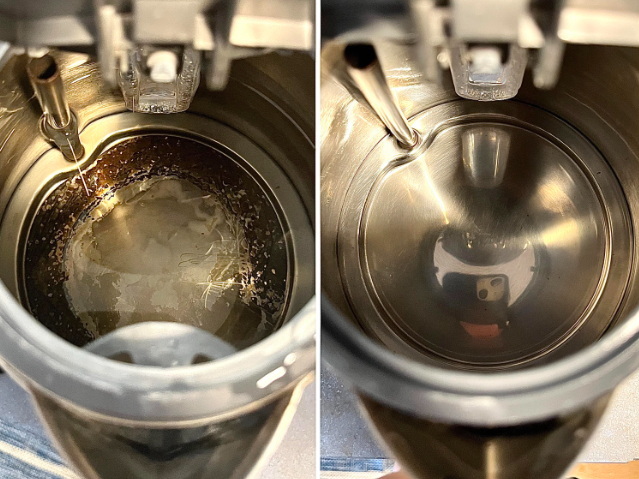
While boiling vinegar can be beneficial for cleaning kettles, there are some risks involved:
- Fumes: The acetic acid vapors can be irritating if inhaled excessively.
- Corrosion: Prolonged exposure to high concentrations of acid can corrode certain materials over time.
- Heating Element Damage: If not diluted properly, vinegar can potentially damage heating elements or other internal components of your kettle.
If you prefer not to use vinegar or want to explore other options, consider these alternatives:
- Lemon Juice: The acidity in lemon juice can also help dissolve limescale without leaving a strong odor.
- Baking Soda: A paste made from baking soda and water can be used for scrubbing stubborn deposits.
- Commercial Descalers: There are various descaling products available specifically designed for electric kettles that may be less odorous than vinegar.
In summary, boiling diluted vinegar in an electric kettle is a safe and effective method for descaling and cleaning purposes when done correctly. Always ensure proper dilution, ventilation, and thorough rinsing afterward to maintain your kettle's longevity and performance.
No, boiling undiluted vinegar can damage your kettle's components and create strong fumes that are irritating to breathe.
It's recommended to clean your kettle every 4-8 weeks depending on usage and water hardness.
While apple cider vinegar can be used, white distilled vinegar is preferred due to its higher acidity and lack of color or odor residue.
Boil plain water in the kettle several times until the smell dissipates completely.
Yes, always refer to your manufacturer's manual as some kettles may have specific warnings against using acidic cleaners like vinegar.
[1] https://www.kitchenaid.com/pinch-of-help/countertop-appliances/how-to-clean-an-electric-kettle.html
[2] https://www.yongkeng.com/can-you-boil-vinegar-in-an-electric-kettle.html
[3] https://www.instructables.com/How-to-Descale-a-Tea-Kettle/
[4] https://www.youtube.com/watch?v=7hVq88n0hAE
[5] https://www.istockphoto.com/de/bot-wall?returnUrl=%2Fde%2Fphotos%2Fcleaning-kettle
[6] https://www.reddit.com/r/chemistry/comments/10uhka9/is_it_safe_to_boil_vinegar_in_a_electric_water/
[7] https://www.goodhousekeeping.com/home/cleaning/a40707243/how-to-clean-electric-kettle/
[8] https://www.youtube.com/watch?v=ogUmsRj8YFk
[9] https://www.youtube.com/watch?v=KC1s4iehjS8
[10] https://chemistry.stackexchange.com/questions/99397/after-boiling-water-in-an-electric-kettle-should-i-empty-it
[11] https://www.foodnetwork.com/how-to/packages/food-network-essentials/how-to-clean-an-electric-kettle
[12] https://cooking.stackexchange.com/questions/1282/how-to-clean-an-electric-kettle
[13] https://www.youtube.com/watch?v=zOd0spJ6wMM
[14] https://www.youtube.com/watch?v=u0cV6mCMekI
[15] https://www.thekitchn.com/how-to-clean-an-electric-kettle-248372
[16] https://www.alamy.com/stock-photo/descaling-a-kettle.html
[17] https://www.youtube.com/watch?v=J-1bbhwjgfw
[18] https://stock.adobe.com/images/woman-pouring-natural-destilled-acid-white-vinegar-in-electric-kettle-to-remove-boil-away-the-limescale-descaling-a-kettle-remove-scale-concept-home-kitchen-background/583819607
[19] https://www.tiktok.com/@kate_cleanhome/video/7221665006629162283
[20] https://www.tiktok.com/@mbalinhlapho7/video/7361706671518797061
[21] https://www.instructables.com/How-to-Descale-a-Tea-Kettle/
[22] https://www.reddit.com/r/chemistry/comments/10uhka9/is_it_safe_to_boil_vinegar_in_a_electric_water/
[23] https://www.youtube.com/watch?v=akI9_lPpuxw
[24] https://www.discusscooking.com/threads/kettle-2x-stopped-working-after-cleaning-with-lemon-juice.107975/


